

Pricing a specialty therapy isn’t just about numbers; it’s a high-stakes balancing act. Manufacturers must establish pricing that reflects the innovation and value of their therapies while navigating payer pushback, government compliance, and patient affordability.
To gain access to federal markets, participation in government programs such as Medicaid, Medicare, and 340B introduces significant operational and financial complexity. Evolving reporting requirements, inflation-based penalties, and expanding drug price transparency laws mean that even minor missteps can result in significant financial exposure and regulatory risk.
Successfully navigating this environment requires more than strategy alone. It demands precision, foresight, and a deep understanding of how pricing decisions have cascading impacts across government programs.
Navigating Complex Pricing Models for Specialty Drugs
Manufacturers face a complex landscape when navigating government pricing programs for specialty drugs, where the channel mix differs from the standard construct of the wholesaler/chargeback model upon which these federal programs were initially designed. Rebates, fees, and discounts offered to specialty distributors and specialty pharmacies have unique characteristics that can significantly affect manufacturer liability under federal programs.
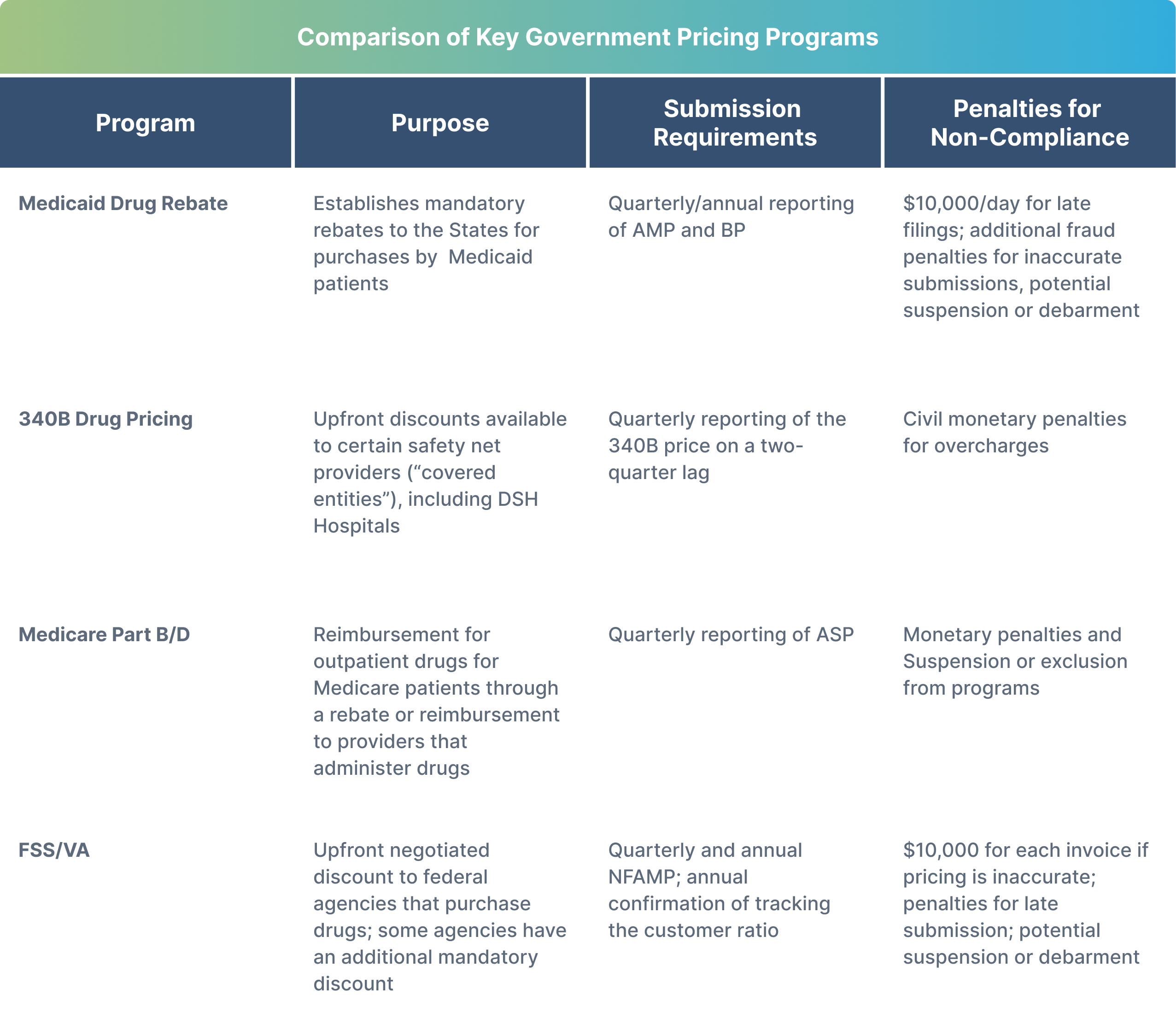
Programs like the Medicaid Drug Rebate Program (MDRP) and the 340B Drug Pricing Program each carry significant penalties for noncompliance and yet require nuanced, precise calculations with reconciliation to financial reporting documents, quarterly/annual submissions, and compliance with unique data definitions and filters.
To best support these efforts, manufacturers must consider the following in their pricing models to ensure they remain compliant with necessary government programs to avoid potential penalties:
- Gross-to-Net Adjustments: Forecasting the full impact of mandatory rebates, discounts, and service fees is critical, as these factors can substantially reduce net revenue and influence reported pricing metrics.
- Inflationary Penalties: Both Medicaid and Medicare impose financial penalties when price increases exceed inflation thresholds. Without careful price planning, these penalties can significantly increase rebate obligations.
- Market Segmentation: Pricing strategies must account for the differing requirements and expectations across government programs, commercial payers, and patient populations.
Aligning Pricing Strategy with Long-Term Market Access
Securing reimbursement for specialty drugs requires a proactive approach to justify value while addressing payer concerns. To successfully gain coverage, manufacturers should consider the following:
- Engage Payers Early: Engaging payers pre-launch ensures that stakeholders understand the therapy’s unique value proposition. Discussing cost-effectiveness, quality-of-life improvements, and long-term savings builds trust and prepares payers for reimbursement negotiations.
- Consider the Advantages of Value-Based Agreements (VBAs): Linking payment to therapeutic outcomes can mitigate disproportionate federal program liability for high-cost therapies. For instance, federal guidance has evolved to allow for unbundling and multiple best prices when VBAs stratify discounting based on outcome, providing relief from the high rebate impact associated with the indiscriminate discounts or rebates
- Use Data-Driven Evidence: Real-world evidence and health economics data demonstrate the value of therapies, highlighting reduced hospitalizations or long-term healthcare cost savings.
While these approaches can strengthen market access, they must be implemented with a clear understanding of how they influence government price reporting and compliance obligations.
Impact of Government Policies on Specialty Pharma Pricing
Policy changes continue to reshape the government pricing landscape, increasing both scrutiny and financial risk for manufacturers.
The Inflation Reduction Act (IRA), for example, introduces new pricing pressures through Medicare drug price negotiations, inflation-based rebates, and manufacturer financial contributions. At the same time, state-level Drug Price Transparency (DPT) laws require detailed disclosures related to pricing decisions, including development, manufacturing, and commercialization costs.
These evolving requirements create additional complexity in several key areas:
- Government Program Adjustments: Changes across Medicaid, Medicare, and 340B alter rebate obligations and pricing calculations, increasing the risk of misalignment if not proactively managed.
- Transparency Requirements: State-level reporting laws expand the scope of required disclosures, adding administrative burden while increasing visibility into pricing strategies.
- Regulatory Interdependencies: Strategic decisions made in that target one market can have unintended consequences across multiple federal programs, underscoring the need for an integrated, coordinated approach.
Turning Complexity into Competitive Advantage
Specialty manufacturers face mounting pressure to strike a balance between innovation, access, and compliance. Successfully navigating the nuances of government pricing from AMP calculations to VBA strategies isn’t just a regulatory necessity — it’s a competitive advantage. By aligning early with the right experts and establishing a data-driven pricing foundation, manufacturers can mitigate risks, enhance market access, and foster sustainable growth.
Need help designing a government pricing strategy that scales with your therapy? Riparian brings deep regulatory expertise and market insight to help specialty pharma manufacturers simplify compliance and optimize reimbursement.
Contact us today to start building a smarter path to market:

Susan Dunne
Managing Director

Jennifer Lospinoso
Managing Director & Consulting Lead